Statement Florals Stealing the Show
When it comes to wedding checklists, florals are almost always a priority item. Nearly all weddings incorporate florals in some capacity to echo and enhance the beauty and emotion of the occasion and to express the distinct style and personality of the couple at hand. That said, the overarching concept of wedding florals is steeped in tradition and can thus tend toward convention; some couples may feel compelled to curtail their floral curiosity and creativity in an effort to “follow the rules” set forth by previous weddings in their families, the purview of popular culture, and beyond.
If you are tempted to prune your wildest wedding floral dreams, let this serve as a sign to put down your shears: just as some of nature’s most stunning flowers grow free and untamed, so too should your ideas. These days, bold and unconventional wedding floral practices—from unexpected flower choices and color palettes to innovations in installation pieces and sustainability practices—are becoming increasingly prevalent, giving you more options than ever before to fully express your unique love story through floriography.
Composition
The path to cultivating your own personal garden of wedding florals begins with selecting which types of flowers you’d like to use. More traditional and frequently used flowers like roses, peonies, ranunculuses, calla lilies, and gardenias are beautiful and timeless, but bolder blooms beckon. Proteas, anthuriums, and anemones are just a few standout focal florals with a lot of personality, and there are also a myriad of unique accent flower options to frame and punch up your focals.
Candice Loyd, who co-owns new Lynchburg-based floral shop Wild Grove Florals with Carolyn Seibel, has a particular favorite uncommon accent flower that lends a touch of modern whimsy to wedding arrangements.
“One of my absolute favorite accent flowers is craspedia,” Loyd said. “The blooms are these little yellow balls that look like nature’s version of little celebratory balloons, so I love adding them to a bright, warm, and cheerful arrangement.”
Color
Daring and unexpected color palettes can also help you create a floral story that’s more personal and less Pinterest-persuaded. For instance, palettes that include multiple rainbow hues or gothic shades—or that feature more than five colors generally—and palettes that combine high-contrast colors can give your wedding a distinctive and dynamic edge.
Another outlying option is an all-green color palette, which is one of Loyd’s top picks.
“I’m really drawn to all-green weddings,” she noted. “They’re very sleek and minimalistic, but they also look very luxurious and allow you to play around with texture in a way that you can’t when you have a bunch of flowers included. These wedding arrangements typically feature different eucalyptuses, ferns, and other types of greenery, potentially alongside some green flowers. Greenery tends to get overlooked when it comes to weddings.”

Configuration
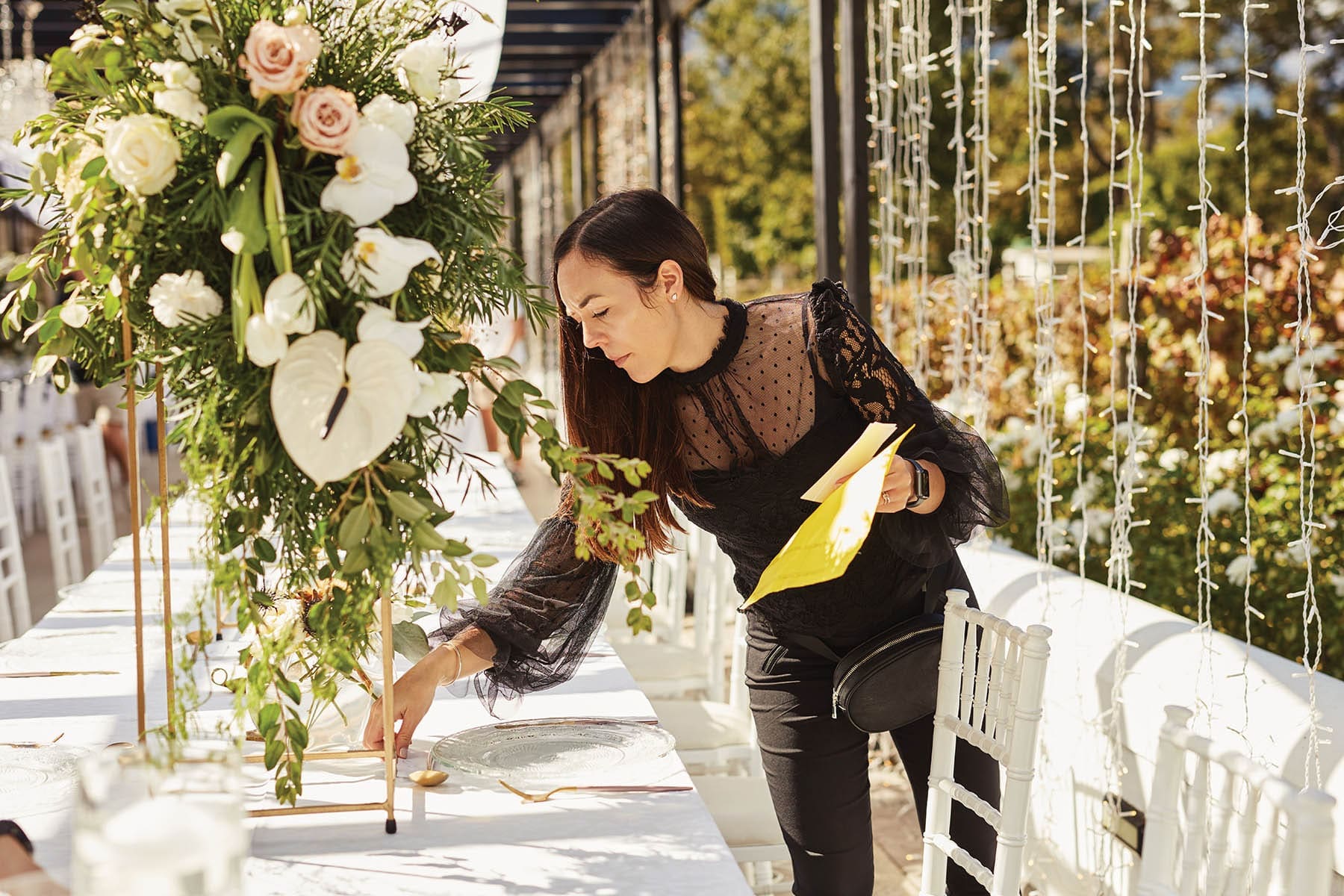
Of course, composition and color aren’t the only aesthetics you can customize creatively for your wedding; you can also think outside the box—or rather, the bouquet—when it comes to configuration. Beyond the fairly standard floral placements of bridal party bouquets and boutonnieres, corsages for select family members, compact end-of-aisle and reception table arrangements, and the occasional arbor featuring a corner or two draped in flowers, an exciting world of wearable and installation floral options awaits. Flowers incorporated into hair, jewelry, and gowns—and even woven into shawls—allow one to act as a living canvas and to take self-expression to dramatic new heights. Speaking of dramatic heights, towering floral installations—along with sculptural pieces in eye-catching shapes and/or placed in unconventional locations—are additional configuration options that you and your guests will never forget.
Loyd loves statement flower crowns and fondly recalls a standout installation piece she helped work on at previous floral shop and Lynchburg staple The Hip Tulip, which gave rise to Wild Grove Florals when its owner (and Loyd and Seibel’s mentor) Kelli Willis retired.
“We made an 8-foot column out of chicken wire that we put greens and flowers into,” she remarked. “It featured a lot of baby’s breath and almost looked like a column made of clouds!”
As Wild Grove Florals’s wedding schedule fills up, Loyd looks forward to delving into more installation pieces and hopes to one day tackle a grand archway completely covered in blooms.

Sustainability
Although sustainability isn’t as glamorous as the other components in this list, it is the most significant aspect of telling a floral story that is as natural and enduring as your love story. Working with a florist who prioritizes sustainable practices such as composting, using preserved flowers, and sourcing organic and/or locally-grown flowers—practices that are fortunately on the rise—is sure to elevate your senses of ownership and pride in your wedding long after the event occurs.
“We try to use locally sourced flowers as often as possible,” said Loyd. “We’ve already gotten flower buckets from Great Day Gardens, which is based in Forest and which sets up shop across from us at the Lynchburg Farmer’s Market every week. I actually also have a garden in my backyard that I’ve been personally tending to. I’ve been working on a project in which I use our flower scraps to do composting for the garden. When floral waste goes into a landfill, it creates methane gas. We do try to dry as many flowers as we can after they pass their expiration dates and use them in dry arrangements, but if they aren’t suitable for that purpose, we try to compost them to help make the garden bigger and more nutrient-rich.”
No matter how you decide to make a statement with your wedding florals, try to be sure that your collective voice as a couple rings loud and clear and that your authenticity outweighs an allegiance to tradition. As Wild Grove says of their forward-thinking florals: “These aren’t your grandmother’s flower arrangements.”